Communication, articulation, storytelling and speaking will be the most important skills to have in the post-AI world.
Just think about it. What will make humans valuable after AI can do all the work humans do? And the answer is your ability to connect with other people. Because that’s the one thing AI cannot do. AI cannot build real, authentic, genuine human connections.
And most of us are not naturally good communicators. It’s extremely rare that someone just grows up as a good communicator without putting in any effort to get there. You either need exceptional parents who taught you how to communicate since you could speak your first words, or you should have been a prodigy who just learned how to communicate when you were three or four years old.
And I would actually argue that the Indian education system, and sometimes even Indian parents, actually prevent you from becoming a good communicator. In schools, you’re supposed to write essays of a thousand words. I remember when I used to write my exams, I would use the most random filler words, the most random words ever, just to be able to fill my thousand word quota. What could have been a 250, 300 word essay which is short, concise, which keeps the reader’s attention, was now a thousand word essay no one would ever read.
At home as well you’re sometimes punished for speaking out, for speaking back, for having your own point of view when elders have a different point of view. You’re punished for literally speaking your opinion. This eventually impacts your confidence and affects the way you communicate for the rest of your life.
So if it’s not something you’re born with, and if it’s something society prevents you from acquiring, how do you actually develop this muscle, this skill of communication?
You can improve by doing the bare minimum and just spending two minutes a day.
Why the bare minimum actually works
I know how that sounds. Two minutes? For a skill that’s supposed to decide your value in the post-AI world?
But think about why most of us never get better at speaking. It’s not that we don’t know we should. It’s that the usual advice is too big. Join a public speaking club. Record a podcast. Take a twelve week course. Speak up more in meetings. All of that needs time, an audience, and courage you don’t have yet. So you do it once, it feels terrible, and you never do it again.
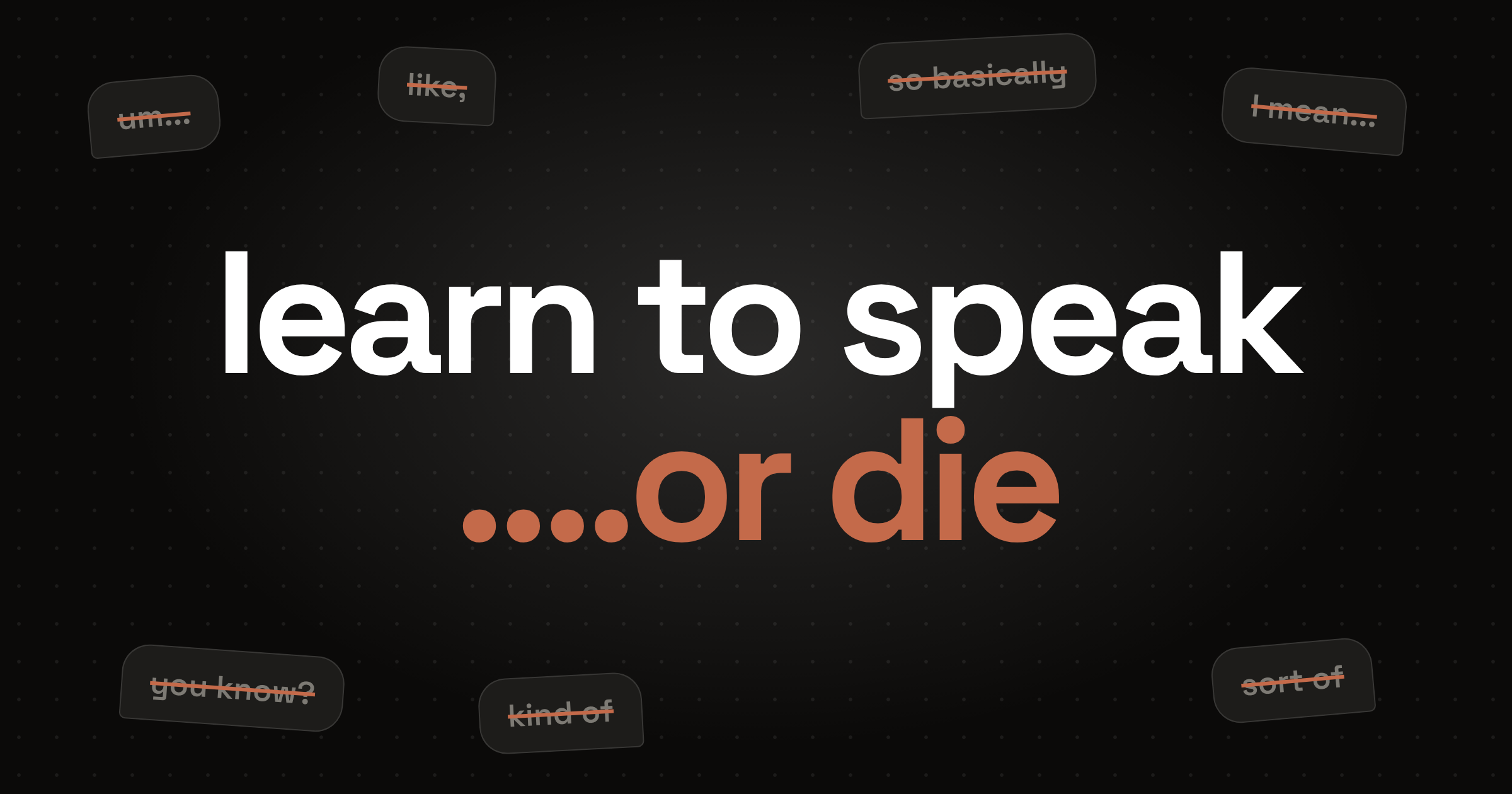
And here’s the other thing. Most of us practice thinking in our heads. Almost nobody practices speaking. You rehearse the perfect answer in the shower, and then in the actual room it comes out as “um, so, basically, like”. Because thinking a sentence and saying a sentence are two completely different skills, and you’ve only ever trained one of them.
So the fix is not a bigger plan. The fix is a smaller one. Something so small you can’t talk yourself out of it. Open your mouth, speak out loud for a minute or two, find out what went wrong, and come back tomorrow. That’s it. That’s the whole method.
The problem is, nobody tells you what went wrong. Your friends are too polite. Your colleagues don’t care. And you can’t hear your own filler words, because you’ve been saying them your whole life.
So I built Oracy
That’s exactly why I built Oracy. It’s the app I wish I had when I was stuffing random words into thousand word essays.
Here’s how it works. You open the app. You get one prompt. You speak out loud for sixty seconds. And then AI gives you honest feedback on what you just said: how clear you were, how fast you were going, how many fillers you used, and what to try next time.
That’s the whole thing. In fact, Oracy asks for even less than two minutes. It asks for one.
And I would actually argue that this is the one place where AI helps you with the thing AI cannot do. AI cannot build your human connections for you. But it can listen to you every single day, without judging you, and tell you the truth about how you sound. Something no teacher, no parent and no friend ever did for you.
A few things I care about with Oracy:
- No audience. No pressure. Nobody is watching. Nobody is going to punish you for speaking your opinion. It’s just you, speaking out loud, and getting better at it.
- One prompt, sixty seconds. No thousand word quota. You learn to say the thing and stop. Short, concise, something people actually want to listen to.
- Honest feedback, in small notes. Your clarity, your pace, your fillers, and one thing to try tomorrow. Not a report card. Just what landed and what didn’t.
- A streak that rewards showing up. Not perfection. You don’t need to be good today. You just need to come back tomorrow.
Use it before a meeting. Before an interview. Before a hard conversation. Or just because you want to feel more like yourself when you speak.
A week in, you’ll notice it. Fewer “ums”, cleaner thoughts, a little more confidence in the room. A month in, speaking stops feeling like something you survive, and starts feeling like something you’re good at.
Get early access
Oracy is in early access right now, and I’m letting people in from the list.
If you want in, go to oracy.heyayush.in, leave your email, and I’ll let you know the moment it’s ready for you.
You were not born a good communicator. School didn’t make you one. Home probably didn’t either. But you can still become one, and it doesn’t take a course or a stage or a personality transplant.
It takes one minute a day.
Learn to speak. Or, you know.